Professional Food Service Carts - Mobile Solutions for Commercial Kitchen Efficiency

food service cart

A food service cart represents a versatile mobile solution designed to enhance operational efficiency in restaurants, hotels, cafeterias, and institutional dining facilities. This essential piece of equipment transforms food distribution and service delivery through strategic design and practical functionality. The food service cart serves multiple purposes, including transporting prepared meals, storing dining supplies, and facilitating efficient service workflows throughout commercial kitchens and dining areas. Modern food service cart models incorporate stainless steel construction, providing durability and meeting health department sanitation requirements. The cart features multiple compartments and shelving systems that organize dishes, utensils, condiments, and beverages systematically. Temperature control capabilities distinguish advanced food service cart models, maintaining optimal food safety standards during transport. Insulated compartments preserve hot foods while separate cooling sections keep cold items at proper temperatures. The mobility aspect proves crucial, with heavy-duty wheels enabling smooth navigation through narrow corridors, busy kitchens, and crowded dining spaces. Ergonomic design principles guide food service cart development, reducing physical strain on staff members during daily operations. Height-adjustable features accommodate different user preferences and service requirements. The cart's storage capacity varies according to specific models, with some accommodating hundreds of meals simultaneously. Technological integration includes digital temperature displays, battery-powered heating elements, and smart monitoring systems that track food safety compliance. Professional food service cart applications extend beyond traditional restaurants to healthcare facilities, schools, corporate cafeterias, and catering operations. The equipment streamlines meal distribution in hospitals, ensuring patients receive properly heated meals efficiently. Educational institutions utilize these carts for cafeteria service and special event catering. The food service cart design prioritizes hygiene through smooth surfaces, removable components, and dishwasher-safe parts that facilitate thorough cleaning protocols essential for food safety compliance.

New Products

The food service cart delivers substantial operational benefits that directly impact business efficiency and customer satisfaction. Staff productivity increases significantly when using a properly designed food service cart, as workers can transport multiple items simultaneously rather than making numerous individual trips. This enhanced efficiency reduces labor costs and allows establishments to serve more customers with existing personnel. The cart eliminates physical strain associated with carrying heavy trays and dishes, reducing workplace injuries and associated compensation costs. Employee safety improvements translate to lower insurance premiums and decreased staff turnover rates. Temperature maintenance capabilities ensure food quality standards remain consistent throughout service periods. Hot foods stay at serving temperatures while cold items remain properly chilled, preventing bacterial growth and foodborne illness risks. This temperature control feature reduces food waste by maintaining optimal conditions that extend serving windows. The food service cart enhances customer experience by enabling faster service delivery. Restaurants can serve multiple tables simultaneously, reducing wait times and improving table turnover rates. The professional appearance of modern carts contributes to overall establishment ambiance and demonstrates commitment to quality service. Storage organization features maximize space utilization in compact kitchen environments. Multiple shelves and compartments accommodate dishes, beverages, condiments, and serving implements in designated areas, reducing preparation time and improving workflow efficiency. The mobility advantage allows staff to position carts strategically throughout dining areas, enabling responsive service that adapts to changing customer demands. Maintenance requirements remain minimal due to durable construction materials and straightforward cleaning procedures. The food service cart investment pays dividends through reduced operating costs and improved service capabilities. Energy efficiency features in heated models consume minimal power while maintaining consistent temperatures. The equipment's longevity ensures reliable performance over years of daily use, providing excellent return on investment. Flexibility in applications allows establishments to adapt cart usage according to specific service requirements, from breakfast buffets to evening dinner service. The professional-grade food service cart supports compliance with health department regulations through design features that facilitate proper sanitation and food handling procedures.

Practical Tips

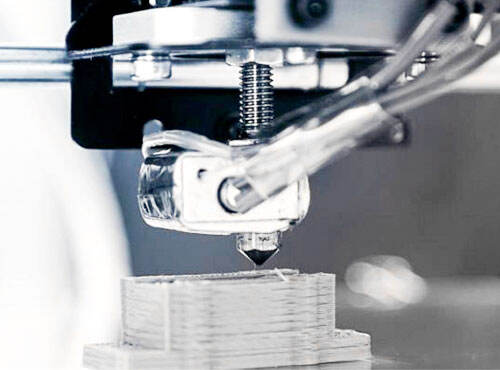
3D machine equipment: accelerated Sample - making Process

12

Feb

3D machine equipment: accelerated Sample - making Process

View More
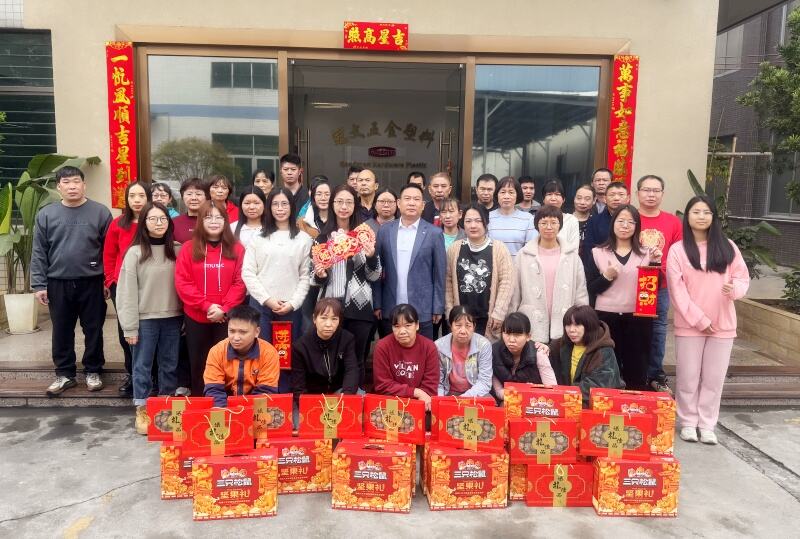
The Unforgettable Annual Party of Our Company in 2025

12

Feb

The Unforgettable Annual Party of Our Company in 2025

View More
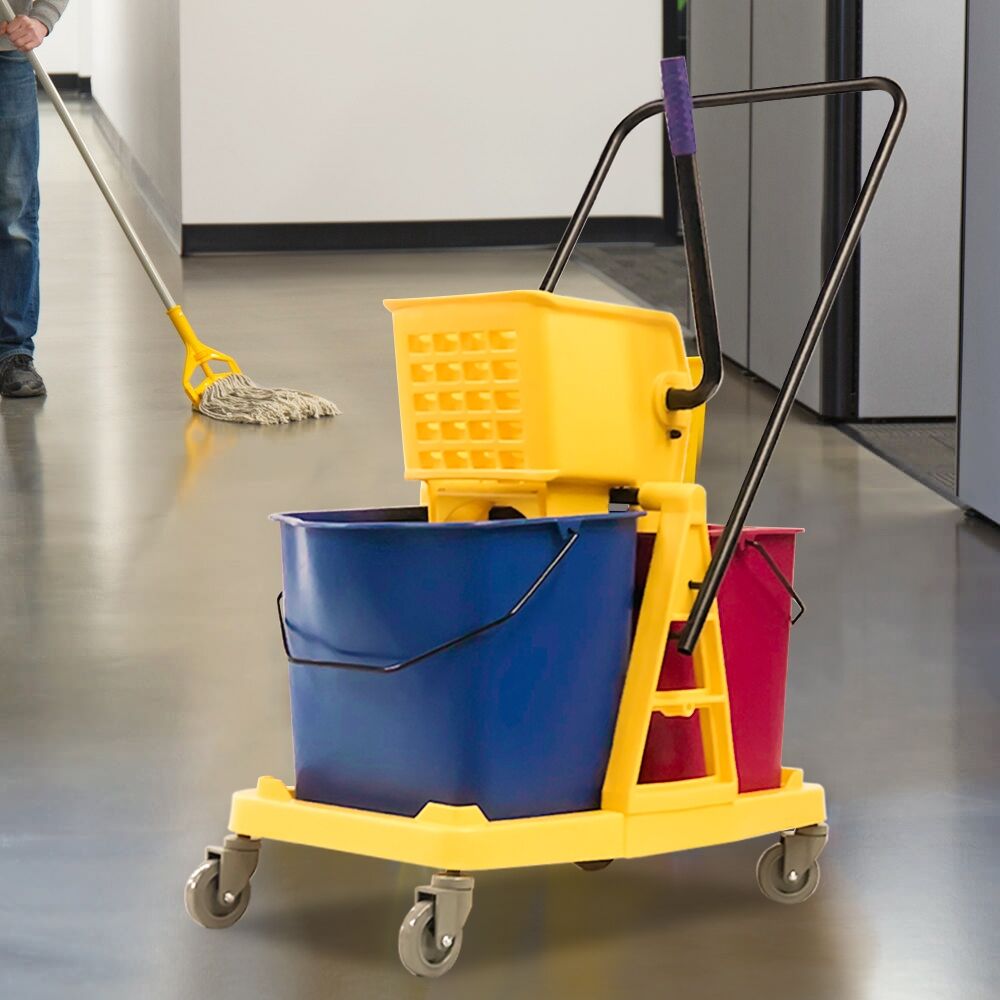
One-Stop Procurement of Hotel Cleaning Products: Enhancing Cost Efficiency and Operational Effectiveness for Global Buyers

04

Jan

One-Stop Procurement of Hotel Cleaning Products: Enhancing Cost Efficiency and Operational Effectiveness for Global Buyers

View More
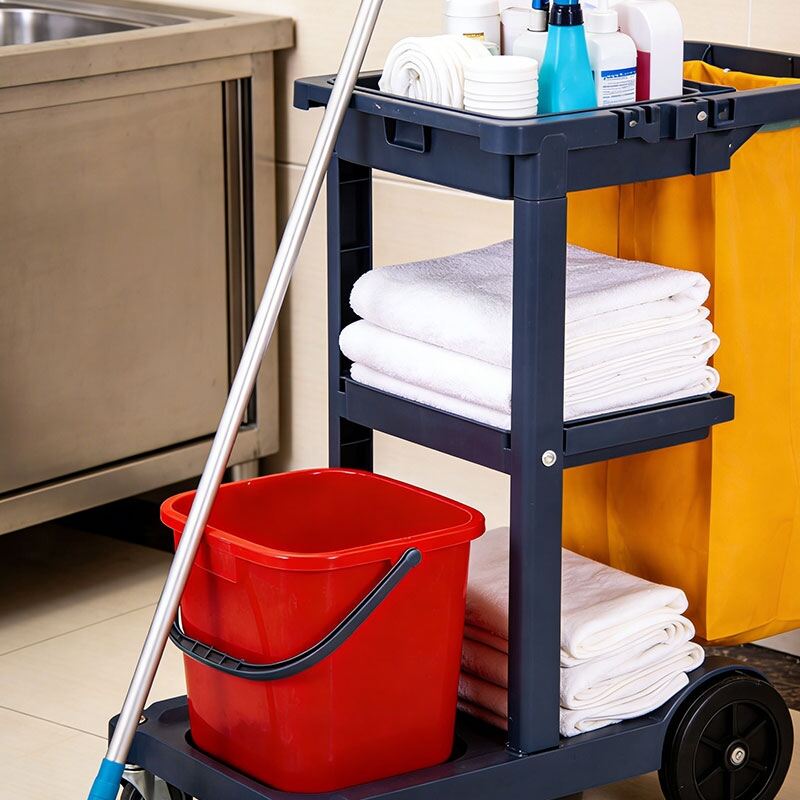
Essential Usage Requirements for Commercial Hotel Cleaning Supplies

04

Jan

Essential Usage Requirements for Commercial Hotel Cleaning Supplies

View More

Get a Free Quote

Our representative will contact you soon.
Email
Phone/WhatsApp/WeChat
Name
Company Name
Message
0/1000

food service cart

Advanced Temperature Control Technology

Advanced Temperature Control Technology

The sophisticated temperature management system represents the most crucial feature of modern food service cart designs, directly impacting food safety and customer satisfaction. This advanced technology incorporates dual-zone climate control that simultaneously maintains different temperature ranges within a single unit. Hot compartments utilize precise heating elements that distribute warmth evenly throughout the storage area, preventing hot spots that could overcook food or cold zones that compromise safety standards. The system maintains temperatures between 140°F and 180°F in heated sections, ensuring compliance with health department requirements for safe food service. Cold storage areas feature efficient refrigeration components that keep items below 40°F, preventing bacterial growth and maintaining freshness. Digital temperature displays provide real-time monitoring capabilities, allowing staff to verify proper conditions at a glance. The food service cart includes temperature logging features that record data throughout service periods, supporting compliance documentation and quality assurance protocols. Insulation technology plays a vital role in energy efficiency, utilizing advanced materials that minimize heat transfer between compartments. This design prevents cold sections from being affected by adjacent heated areas, maintaining optimal conditions in both zones simultaneously. The temperature control system operates on standard electrical connections, making installation straightforward in any commercial kitchen environment. Battery backup options ensure continued operation during brief power interruptions, protecting food safety even during unexpected situations. Programmable controls allow operators to set specific temperatures for different food types, optimizing holding conditions for various menu items. The system includes alarms that alert staff when temperatures drift outside acceptable ranges, enabling immediate corrective action. This proactive monitoring prevents food waste and maintains service quality standards. The food service cart temperature technology reduces liability risks associated with foodborne illness while supporting consistent culinary presentation. Professional-grade components ensure reliable operation under demanding commercial conditions, providing years of dependable service that justifies the investment through improved operational efficiency and customer satisfaction.
Ergonomic Design and Mobility Features

Ergonomic Design and Mobility Features

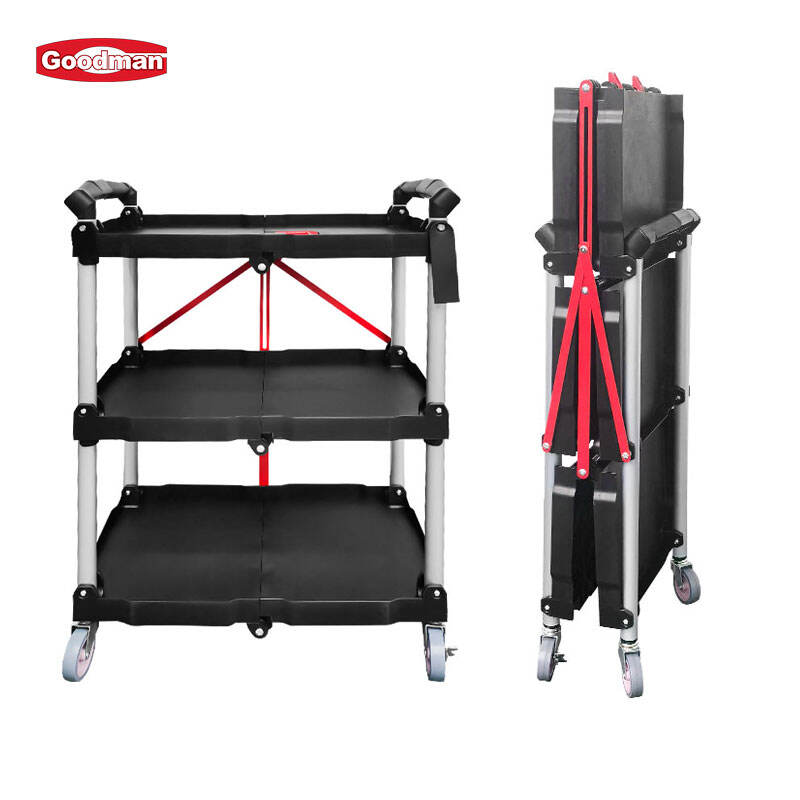
The ergonomic engineering of professional food service cart models prioritizes user comfort and operational efficiency through thoughtful design elements that reduce physical strain and enhance workplace productivity. Height optimization ensures comfortable access for staff members of varying statures, typically ranging from 32 to 38 inches for optimal ergonomic positioning. This careful attention to anthropometric data prevents back strain and repetitive stress injuries commonly associated with food service operations. The cart features strategically positioned handles that provide secure grip points during transport, utilizing non-slip materials that maintain control even with wet hands. Weight distribution engineering centers the load properly over the wheel assembly, reducing pushing and pulling effort required for movement. The food service cart incorporates smooth-rolling casters designed specifically for commercial kitchen environments. These heavy-duty wheels navigate seamlessly across various floor surfaces, from tile and concrete to carpet and rubber matting. Swivel mechanisms enable precise maneuvering around obstacles and tight corners commonly found in busy kitchens and dining areas. Locking mechanisms on selected wheels provide stability during loading and serving operations, preventing unwanted movement that could cause accidents or spills. The mobility system includes shock-absorbing features that minimize vibration and impact during transport, protecting delicate items and reducing noise levels in customer areas. Compact design dimensions allow the food service cart to access narrow corridors and service areas while maximizing storage capacity within space constraints. Foldable components on certain models enable space-saving storage when not in use, addressing concerns in facilities with limited storage areas. The push-pull design requires minimal force application, typically under 25 pounds of effort for fully loaded units, making operation comfortable for staff throughout extended shifts. Corner guards and bumper systems protect both the cart and surrounding surfaces from damage during daily use. The thoughtful engineering extends to maintenance accessibility, with easily removable wheels and components that facilitate routine cleaning and repair procedures. This user-centric approach to food service cart design directly impacts workplace satisfaction and operational efficiency, contributing to improved staff retention and enhanced service quality.
Versatile Storage and Organization Solutions

Versatile Storage and Organization Solutions

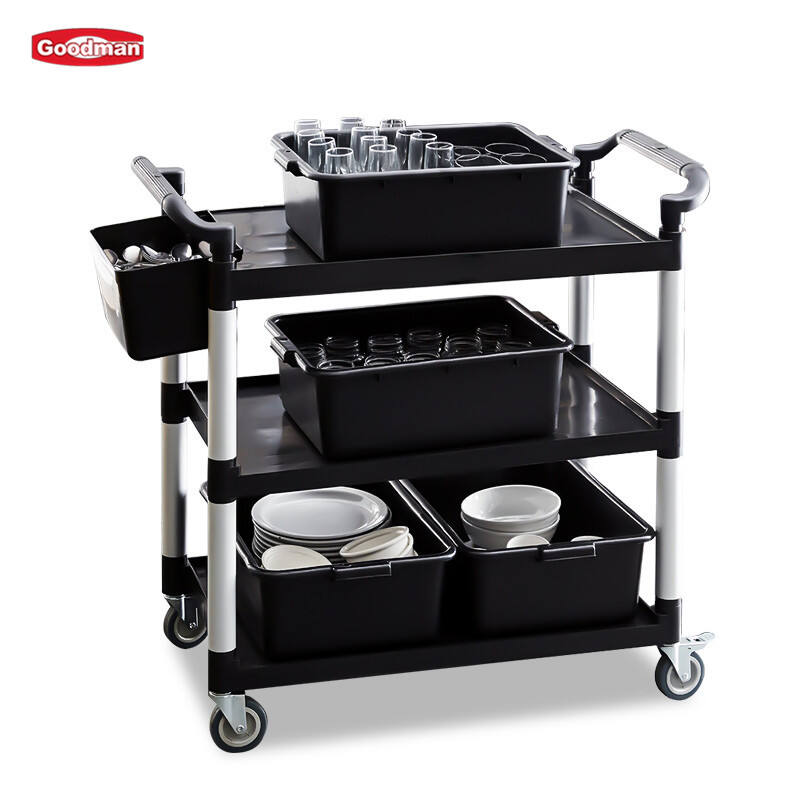
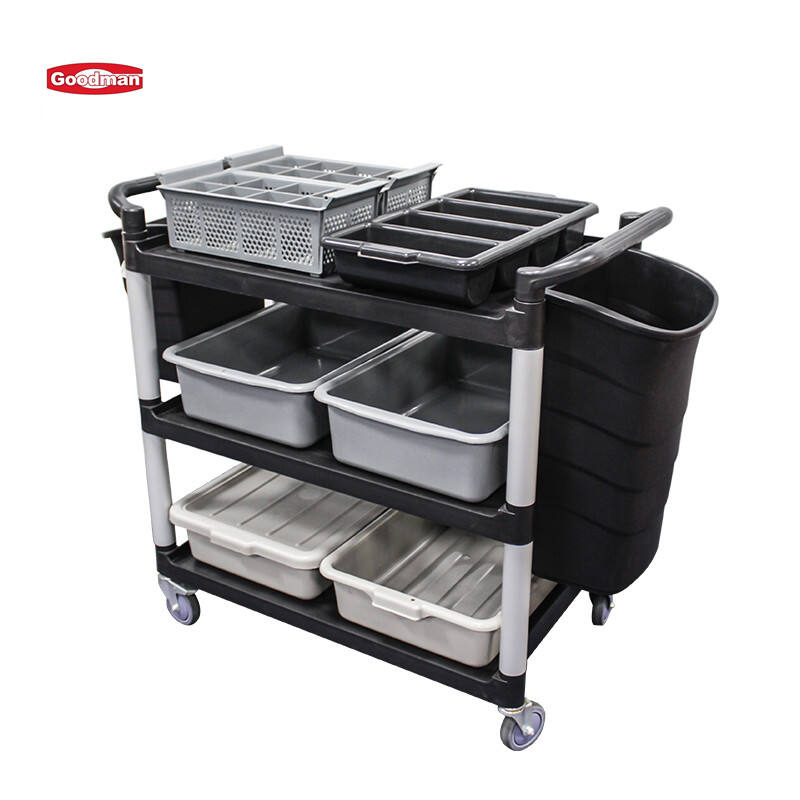
The comprehensive storage architecture of modern food service cart designs maximizes organizational efficiency while accommodating diverse operational requirements across various foodservice environments. Multi-level shelving systems provide flexible storage configurations that adapt to different serving needs, from breakfast service requiring cereal dispensers and juice containers to formal dinner service demanding precise plate organization and condiment accessibility. The food service cart features adjustable shelf positions that accommodate items of varying heights, from tall beverage pitchers to compact sauce containers. Specialized compartments include designated areas for flatware, napkins, and serving utensils, preventing cross-contamination while maintaining easy access during service periods. The organizational system incorporates dividers and separators that keep similar items grouped together, reducing search time and improving service speed. Secure storage areas protect valuable items like specialty condiments and premium ingredients from theft or contamination. The cart design includes weatherproof storage options for outdoor catering events, featuring sealed compartments that protect contents from environmental factors. Removable components facilitate thorough cleaning and sanitization, supporting health department compliance requirements. The food service cart storage system accommodates both bulk serving needs and individual portion control, with sections suitable for large serving trays and smaller containers for personal condiments. Transparent storage areas enable quick inventory assessment without opening compartments, supporting efficient restocking procedures. The versatile design adapts to seasonal menu changes and special event requirements, providing flexibility that extends equipment value across diverse applications. Integration features allow multiple carts to connect for expanded capacity during high-volume service periods. The storage architecture includes ventilation systems that prevent condensation buildup and maintain optimal conditions for stored items. Specialized holders secure bottles and containers during transport, preventing breakage and spills that could create safety hazards. The food service cart organizational features reduce waste by maintaining proper storage conditions that extend product freshness and prevent spoilage. This systematic approach to storage and organization directly impacts operational efficiency, cost control, and service quality, making the investment valuable for establishments seeking to optimize their food service operations through improved logistics and presentation standards.